Ghost Casting
Spec work with running spot energy. We ran a real casting session for a woman who does not exist, locked her identity the way a character department locks a CG double, taught a neural network her face on a desk GPU, and then shot her across five cities in one night. Every discipline from twenty years of production survived. Only the trucks didn’t.
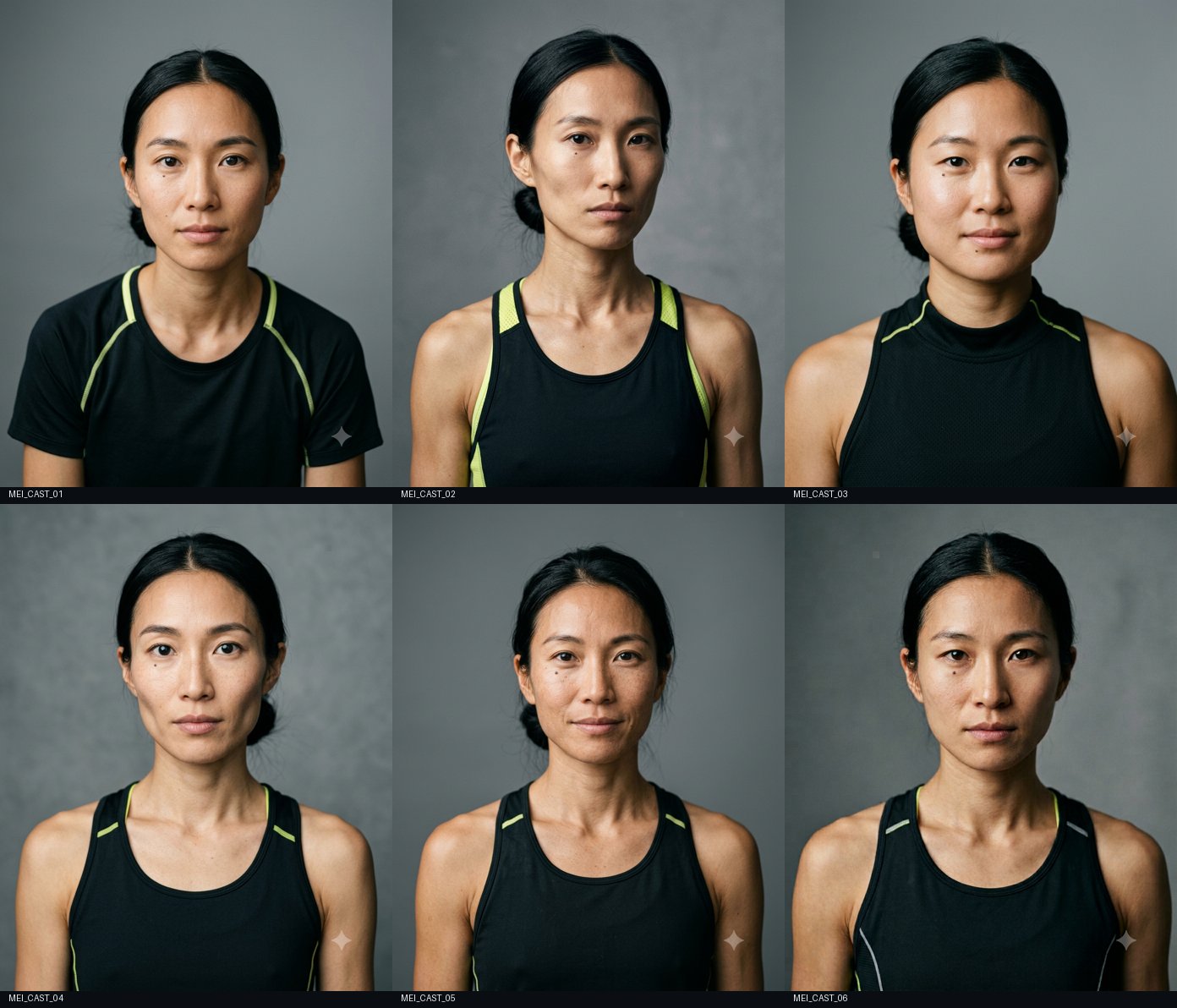
We held a casting session for six women who don’t exist.
The brief: a fit Asian American runner with one identity anchor, a small beauty mark under her left eye. Six candidate plates were generated as a real casting would run: same setup, six different faces, reviewed like a callback sheet. Candidate 04 booked the job. We call her Mei.
Then the machines started lying. Every single generation, across two different AI systems, put the beauty mark on the wrong side. One system caught its own error, apologized, and got it wrong again. The fix was not a better prompt. The fix was production discipline: one approved master plate became the single source of truth, and every downstream frame references it.
Then we taught a machine her face.
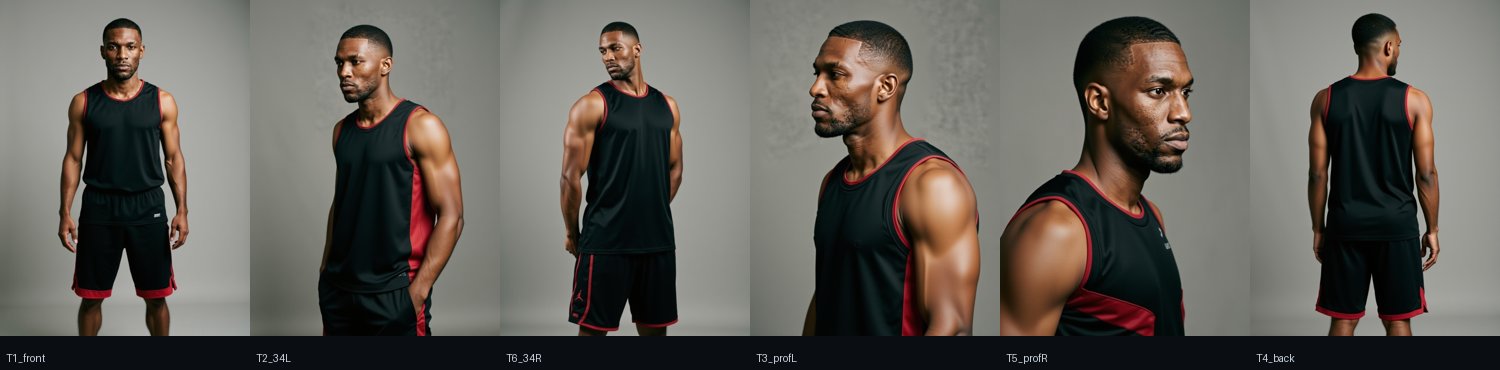
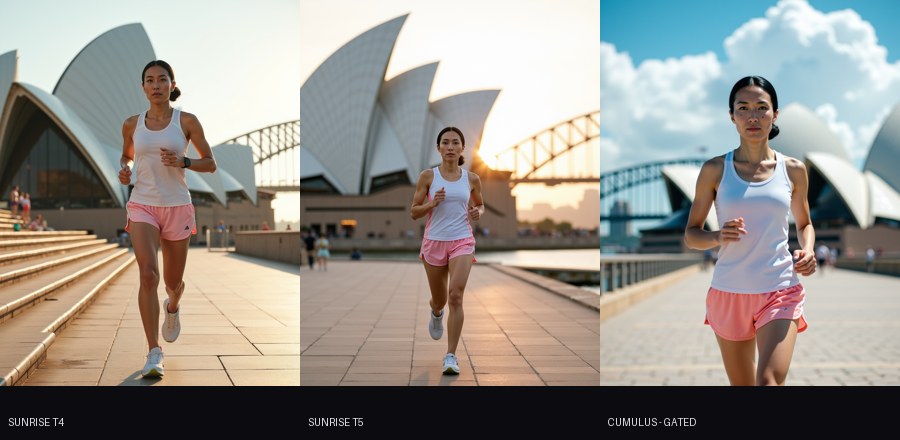
From the approved plate: a six angle studio turnaround, a 26 image training dataset, and roughly four and a half hours of training on a single desk GPU. The strip below is the same prompt rendered at checkpoints during training, from the model’s generic guess at step zero to Mei, locked, at step 2500.
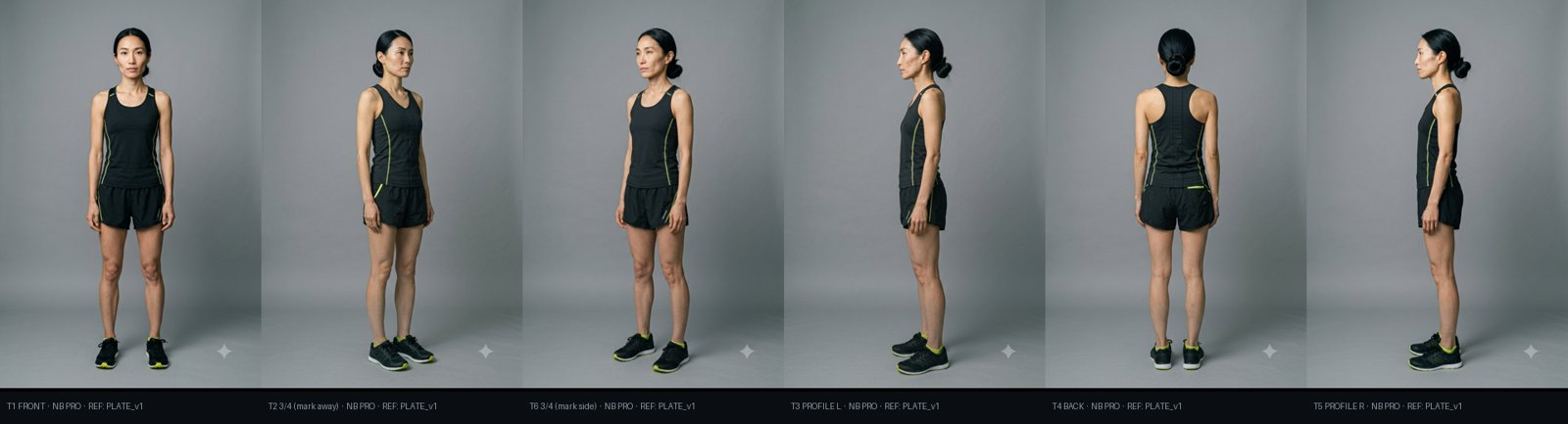
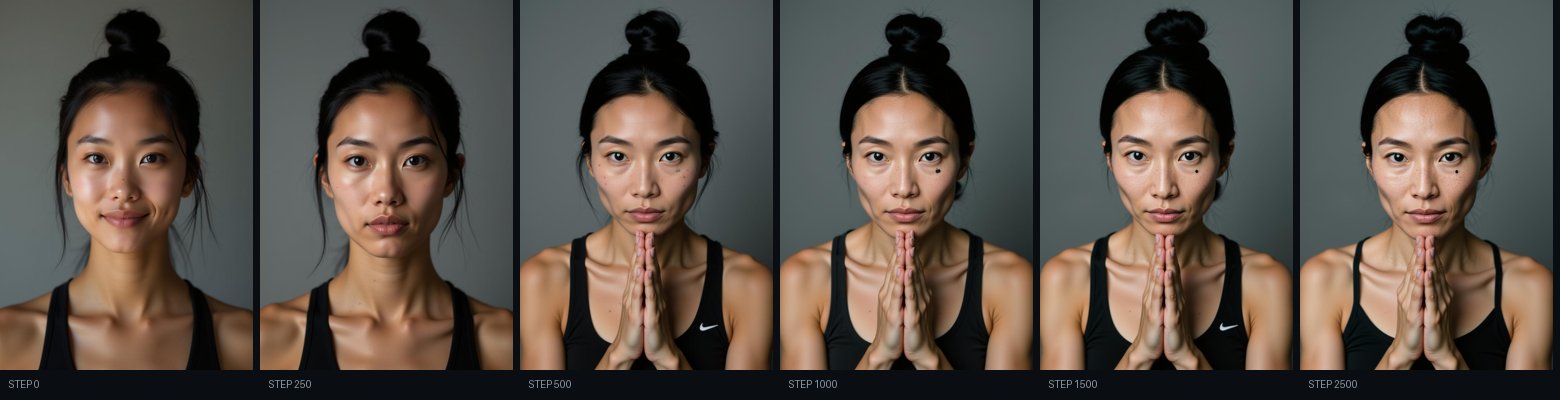
The result is directable talent: one trigger word now produces Mei in any scene, any light, any wardrobe, with no reference image attached. And the system is repeatable; a second character, a basketball athlete with his own identity anchor, went from casting to turnaround in a day.
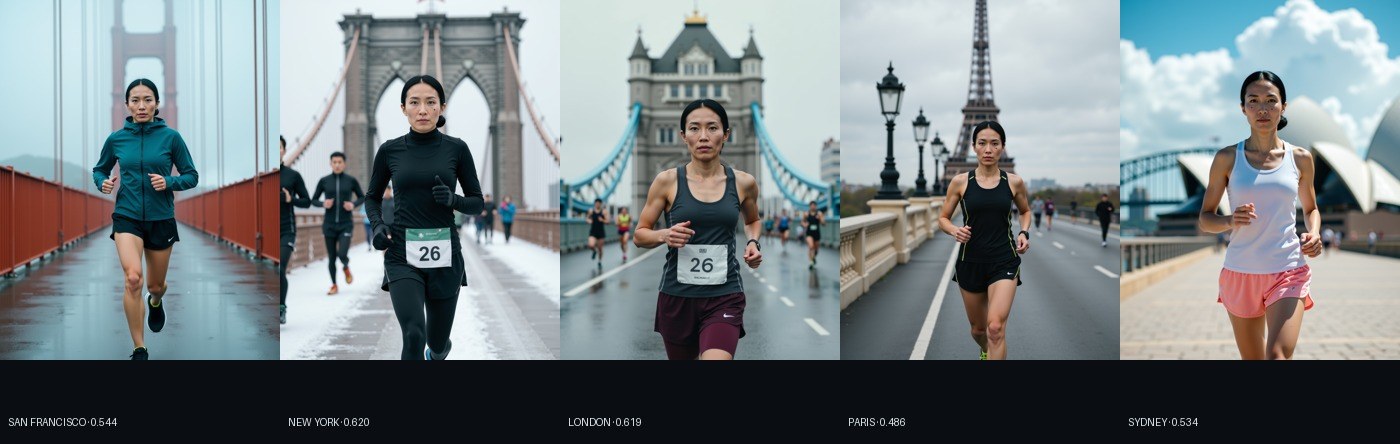
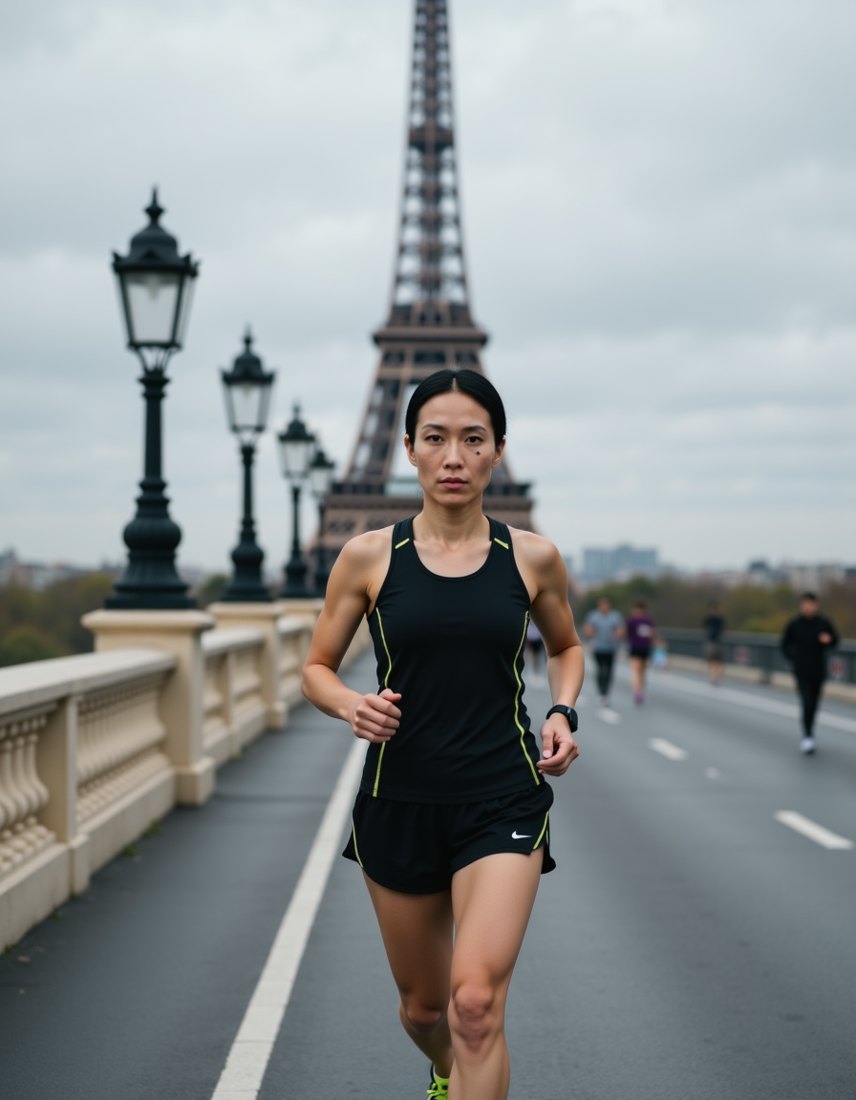
Five cities. Zero flights. One night.
The lesson of the shoot: the discipline isn’t prompting, it’s pre-production. Every location was scouted against real reference photography before a single frame rendered; every wardrobe came from a locked kit library matched to conditions; every sky was a directed choice. Scouted locations rendered believable on the first take. The unscouted one took three rounds and still argued about the paint color.
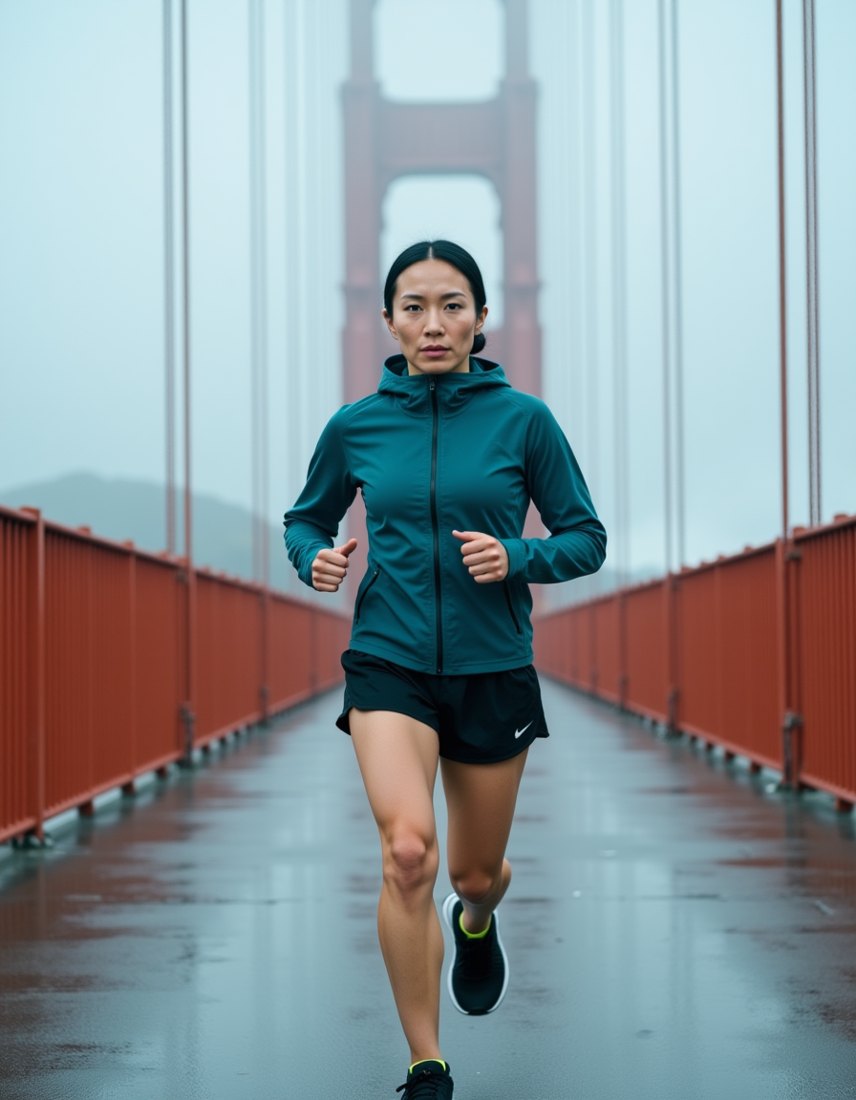
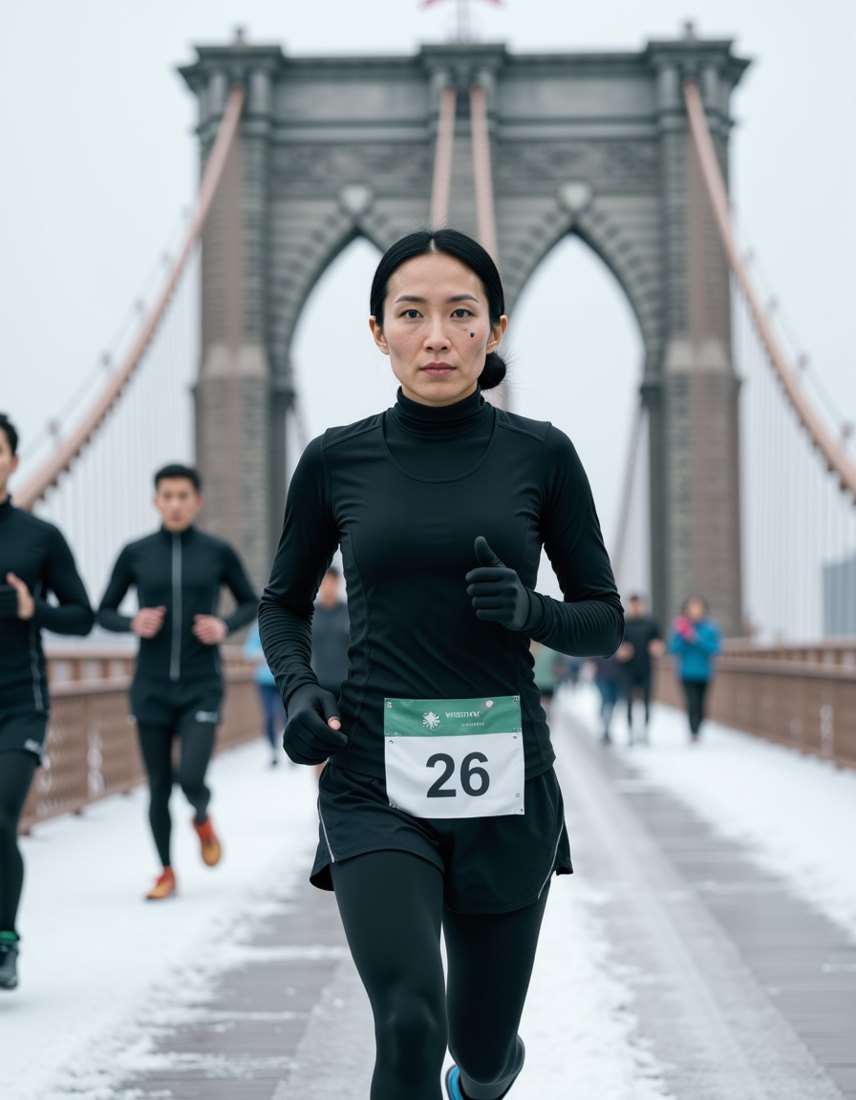
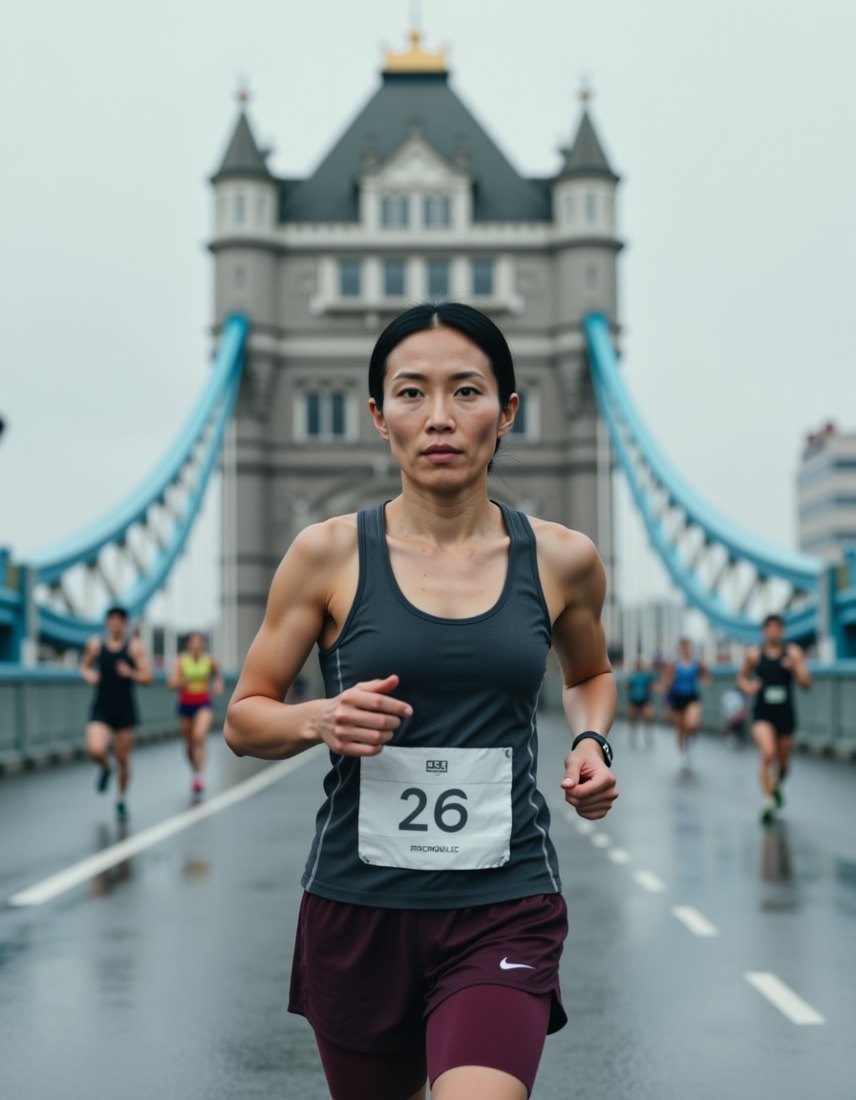
Client notes, on talent that doesn’t exist.
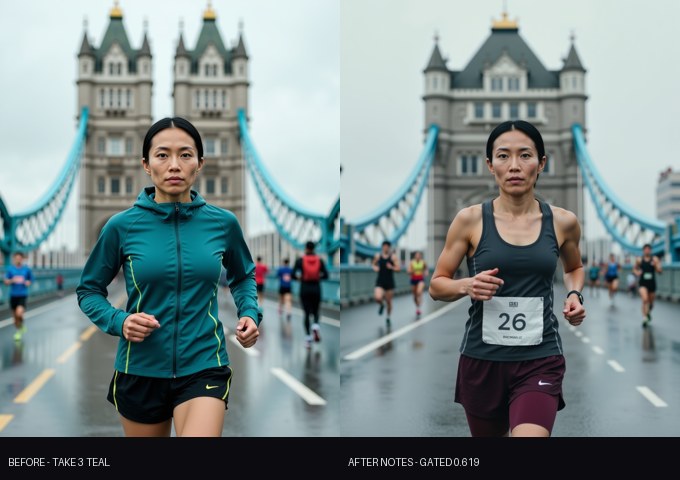
Mid review, the director gave notes like any campaign review: change the London wardrobe to grey and burgundy. Push her eight feet back from camera. Keep her build consistent with the casting. Swap Sydney to a lighter kit for the sunrise. Every note executed in about a minute per pass, from the original pixels, like a retoucher who never sleeps.
“It still feels like it’s drifting.”
Late in the shoot, the director’s eye flagged something the takes couldn’t prove: the faces felt slightly off-model. So we measured it. A face recognition model scored every frame against the master plate, and the eye was right: every hand picked keeper sat below the same person threshold.
The answer was a loop: render, score, auto reject, re roll, until the number clears. The loop out picked the humans on its first run, and every frame in the hero grid above carries its verified score.
| City | Eyeballed pick | Drift gated |
|---|---|---|
| New York | 0.418 | 0.620 |
| London | 0.438 | 0.619 |
| San Francisco | 0.372 | 0.544 |
| Sydney | 0.389 | 0.534 |
| Paris | 0.270 | 0.486 |
What still fights back.
The honest ledger, because credibility is the product: the models hallucinate brand logos onto plain athletic wear roughly half the time, and prompt bans don’t stop them; a standing logo scrub pass does. Weather under delivers: heavy rain renders as drizzle. Landmarks render as vibes unless you scout them against reference photography. Identity drifts a few percent per take and must be gated, not trusted. None of these are reasons it doesn’t work. They are the job: the person who knows a wrong frame when they see one is now the entire quality department.