The bid sheet is a producer's native document. Every job I have ever run started as one: days, rates, roles, contingency. So when I finished mastering Chapter One of “Bo Knows,” my animated short about one of advertising's great origin stories, I did the thing twenty years of habit demanded. I bid it. Twice. Once the way I would have bid it through a studio, and once the way it actually got made.
The old sheet
A chaptered animated short at this craft level, painterly, character driven, cut to a scored VO, is a real line on a real studio's books. You are buying a director, a designer, an animation team, an editor, sound, and the weeks it takes for those people to pass the work between them. Anyone who has bid that job knows it books solidly into six figures and eats a season of the calendar. That is not waste. That is what a room full of specialists costs, and the work those rooms make built my whole career.
The actual sheet
Here is what Chapter One actually consumed, off the production folder, not from memory.
Read the ratios, not the totals. 163 frames to keep 15. 47 renders to fill a dozen shots. Iteration replaced labor as the variable on the sheet. The old budget's biggest number was people's time. The new budget's biggest number is attempts, and every attempt has a price on it, in credits and in your evenings. A producer who cannot read a retry curve will blow this budget exactly the way a producer who cannot read a crew day blows the old one.
What did not get cheaper
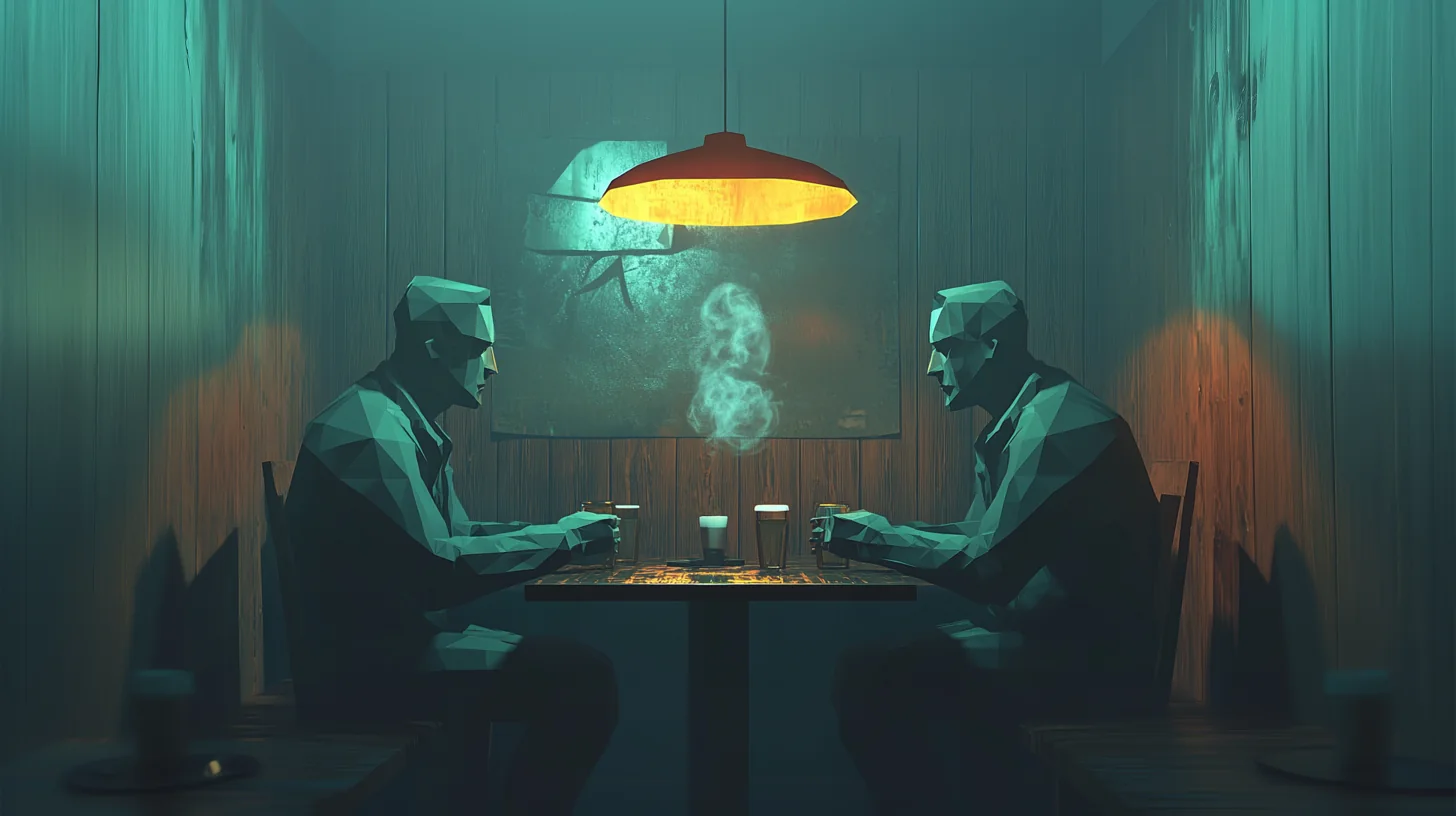
The management did not go away. It moved. There is no camera department, but there is aspect ratio discipline, because frame interpolation only works when both keyframes match. There is no negative prompt field in Kling's frame mode, so the frames themselves have to carry everything you do not want, which means design is doing the job that used to belong to a whole preproduction meeting. And when a render came back with garbled text hallucinated onto a wall, the call to keep it, because it reads as bar TV flicker, was a director's call. No model made it. No model will.
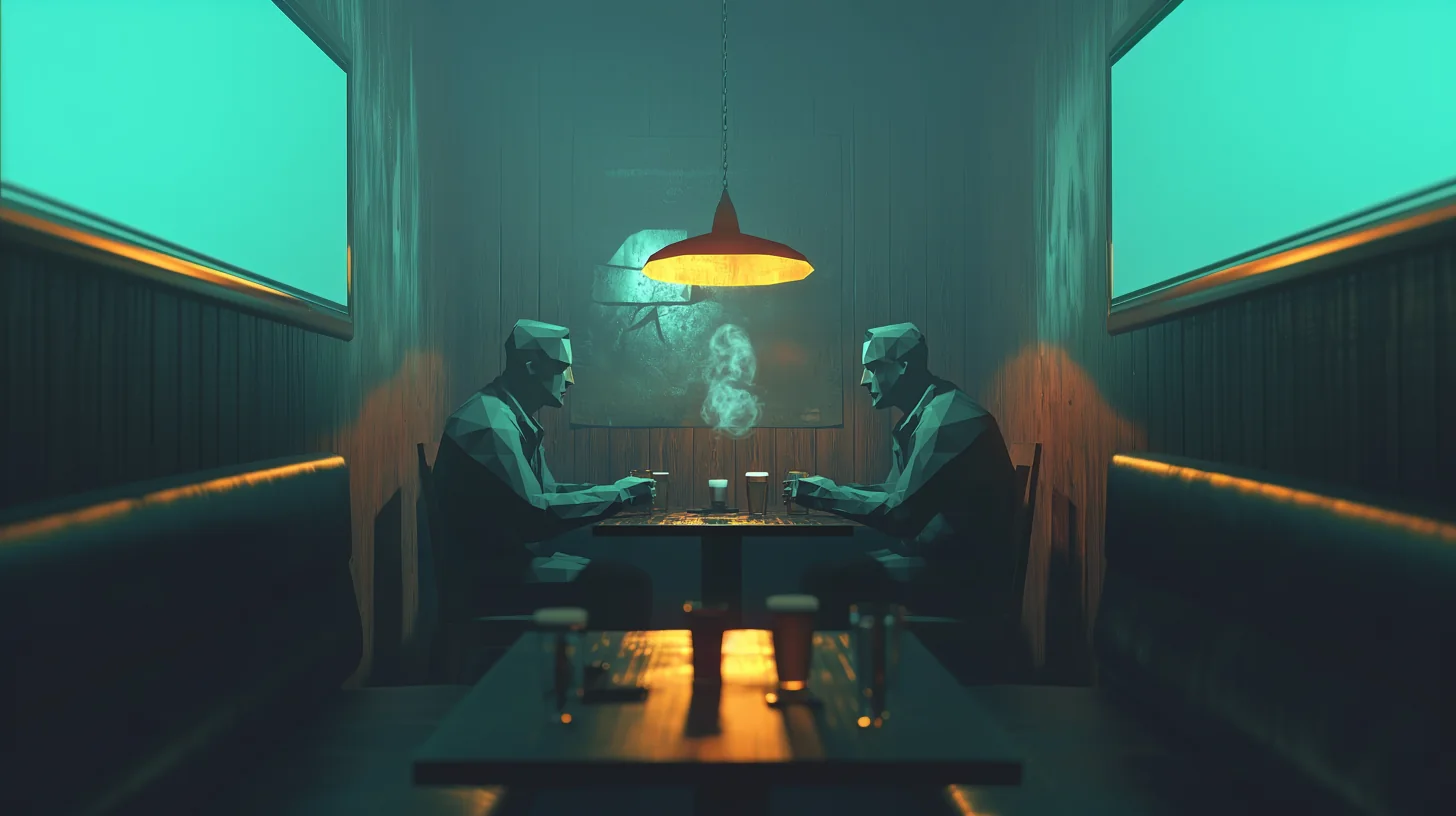
The two frames above are the whole method: the push in is not a camera instruction, it is the distance between keyframe A and keyframe B. Getting that to hold, same men, same booth, same light logic, across 47 renders is version control, manifests, and the same consistency discipline I used to enforce on a team of fifteen. The producer's job did not shrink. It relocated.
Why I am writing this down
Because every shop I talk to is asking the same two questions: what does this stuff actually cost, and can we trust it on client work. The honest answer to the first is a bid sheet, not a think piece. The honest answer to the second is that the craft bar is exactly as safe as the producer running the pipeline. Budgets, schedules, and quality gates did not stop being the job. They became the job again.
Chapter One is mastered. More on the film itself soon.
← All Field Notes